



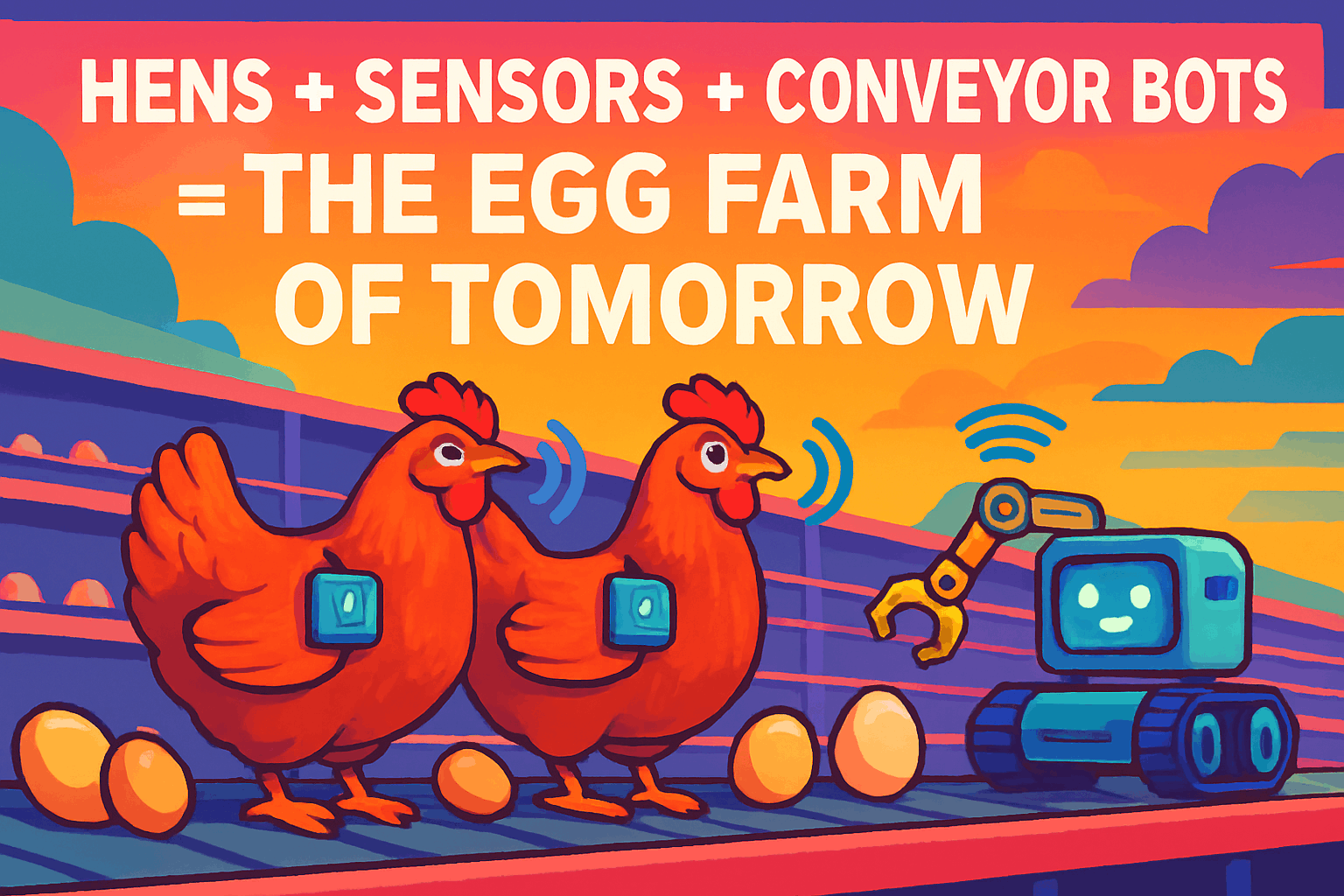
The poultry industry is among the essential industries that contribute to the food chain. One can not expect the food industry to be complete without it. Eggs and chicken meat are the basic requirements of humans, and this industry has to generate tons of production for the masses. Therefore, they use automatic systems to multiply the speed and output. How do they do that? Here is the answer.
The feeding process is the first step, in which the automatic machines feed the hens. They provide a balanced feed and water to keep all the hens in healthy and consistent shape. That is mandatory in the poultry industry, where advanced farms are using automatic methods. Automatic methods are more agile and efficient compared to manual modes. Also, the cost of operation becomes lean in an automatic process if the local labor wage is higher. Balanced feeding and watering ensure that all the hens lay eggs in the same quality and quantity.
There are two types of farms, where one is a broiler farm and the other is a layer farm. Broiler farms contain eggs for hatching purposes, and the layer farms contain eggs for table consumption. The initial process of feeding hens is the same in both, but the breeding process takes place in broiler farms. The layer farms need unfertilized eggs, while the broiler farms need fertilized eggs. That means layer farms do not need roosters, and hens lay eggs without any mating. Both types of eggs have to pass through the scanning process for data collection and analysis.
To make sure the quality and quantity are consistent, poultry farms use advanced data collection machines. They monitor the health of hens and their productivity. Once they lay eggs, machines analyze the eggs in the initial process. They evaluate all the hens in the poultry farm to share details about their health. It allows farms to remove ill hens that could harm others. How much feed should go to them, and how many hens are in a healthy status, all the records are available in the data.
Automated egg collection belts do the job of safely collecting eggs and moving them to their next destination. These conveyors have special belts that safely carry the eggs without causing any risk of slipping, sliding, rolling, and cracks. These egg conveyor belts have a special surface texture that prevents eggs from changing their positions on the moving conveyor belts. All of it takes place at a stable speed.
Then the sensors analyze all these eggs on the egg conveyor belts to separate the rotten and damaged eggs. This egg grading process ensures that all the eggs are the same size and shape. The sizes, which are extra large or small, have to be out of the belt. The machine separates unusual and different eggs from the egg conveyor belt to allow only the same kind of eggs. The scanners make sure no rotten, cracked, leaking, or defective egg passes through the clearance system.
Then the egg conveyor belt takes the eggs to the weight measuring machine. These automatic scanners measure the weight and shell quality to remove the unqualified eggs. Unusual shell quality is a sign of a problem inside the egg, and these machines remove those eggs. The unusual weight also signifies that there is something wrong with the egg. These eggs are not safe from the incubation and hatching process. Therefore, they have to be separated from the batch.
The automatic packaging machines pick the eggs in batches to pack them safely. They do the automatic packaging, which has to meet hygienic practices for consumers’ safety. All the eggs have to be the same in quality and quantity. Therefore, they get the scanning procedure before the packaging.
This step takes place in broiler farms. Eggs that go into the incubators remain inside for three weeks or 21 days. The automatic machine also turns eggs regularly for 2.5 weeks. It allows the chicks inside the eggs to remain safe and active during the hatching process. The incubator keeps a constant temperature to provide a safe position for the hatching process.
Before the hatching process, there is another scanning process that takes place. This scanning process identifies the chick’s sex for the next step. Scanners use candle systems to identify the sex of chicks. Also, these scanners ensure the chick is safe and stable inside the eggs.
Then all the eggs move towards the vaccination process through egg conveyor belts. Automatic machines gently hold each pack of eggs to inject the vaccine inside them. They do that without damaging the shell. It is a sophisticated process, which is mandatory for the safety of chicks. It ensures the chicks are safe from various diseases that could spread from various sources. If there is no vaccination, chicks may contract diseases that could harm them as well as other chicks after the hatching process. So, this process is an automatic one, which provides safe hatching.
The eggs with the female chicks move towards a separate breeding process. Unfortunately, male chicks have to go through the culling process after they hatch out of their eggs. That is a sad and cruel reality of poultry farms. The female chicks are then fed for the mature form, known as hens. In the feeding hall, they are monitored by advanced cameras. These cameras have scanners to detect sick chicks. The same is for the hens, which are scanned by cameras for disease detection. These detectors help separate the sick hens. Bird flu and various diseases are common in chickens. Therefore, automatic machines scan all the hens continuously to make sure only the safe hens stay together.
This was the process of egg production, packaging, and hatching. Both broiler and layer poultry farms use similar initial processes to collect eggs on egg conveyor belts. The table eggs are unfertilized, and the broiler eggs are fertilized. The unfertilized ones solely go for the consumption process for industrial, commercial, and residential consumers. The broiler eggs are used for chicken farming and the meat process. That is how these two separate farms perform automatic operations.